
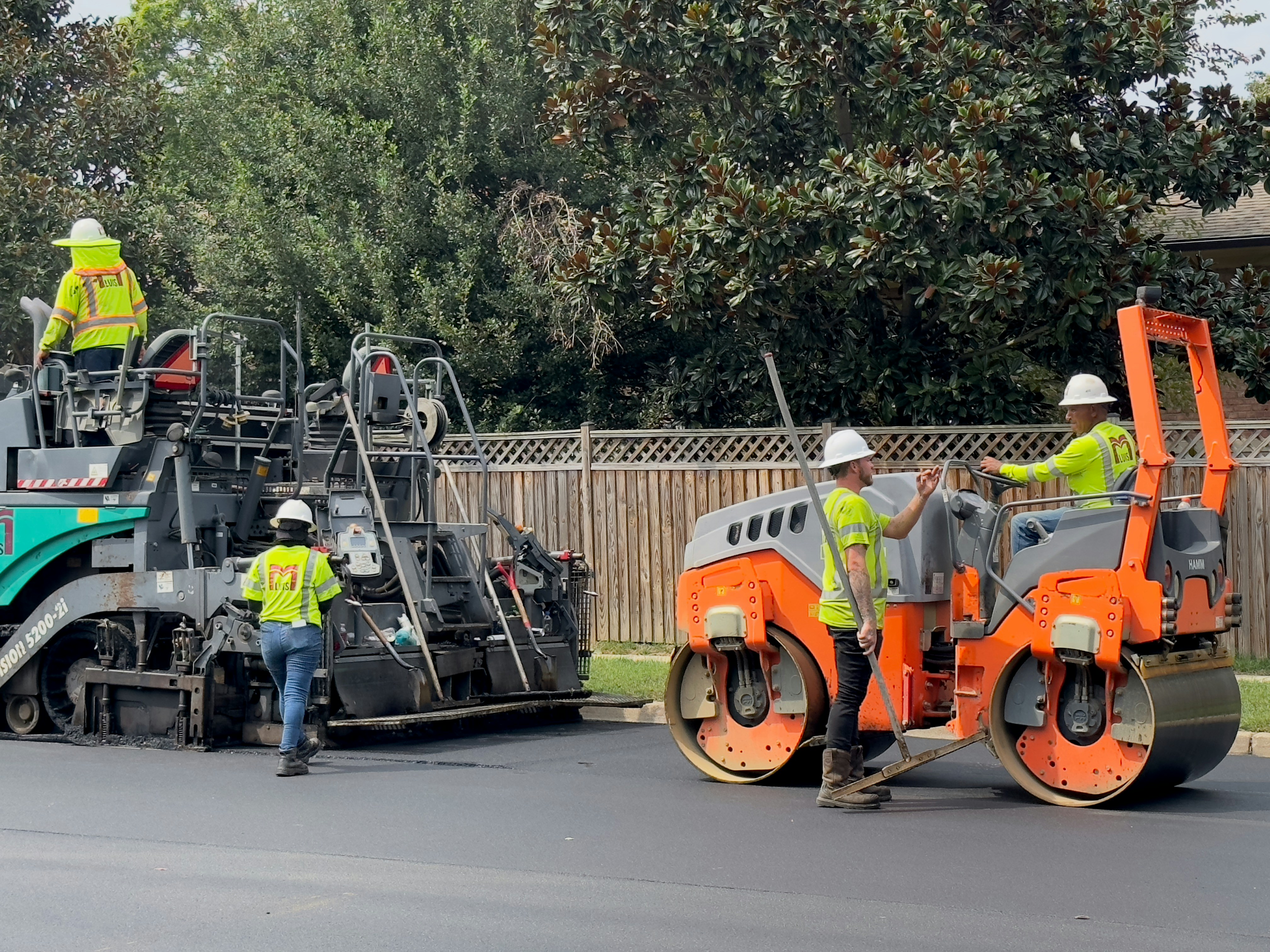
Is Asphalt Cheaper Than Concrete? Here's the Real Cost Breakdown
Is Asphalt Cheaper Than Concrete?
If you're comparing driveway or parking lot materials, you've probably run into this question: is asphalt cheaper than concrete? The short answer is yes — upfront. But the full answer is more complicated, and it's worth understanding the whole picture before you decide, since the cheaper option today isn't always the cheaper option over time.
At K&E Flatwork, we install concrete for driveways, patios, and flatwork projects every week, and cost is one of the first questions every homeowner asks. Here's an honest, detailed breakdown of how the two compare — not just on price, but on everything that affects what you actually pay over the life of the surface.
Upfront Cost: Asphalt Has a Lower Sticker Price
Asphalt typically costs less to install than concrete. On average, asphalt runs somewhere in the range of $3–$7 per square foot installed, while concrete typically runs $6–$12 per square foot, depending on region, thickness, and finish. That gap is the main reason asphalt has a reputation as the "budget" paving option — but a lower sticker price is really the only place asphalt has an edge.
The lower upfront number comes down to a few factors:
- Asphalt cures faster, which reduces labor and site time
- The raw material is generally less expensive than concrete
- Asphalt doesn't require the same finishing work (stamping, coloring, sealing) that concrete offers
So if the question is purely is asphalt cheaper than concrete on installation day, the answer is yes — but that's where asphalt's advantages largely end.
Long-Term Cost: Concrete Is the Smarter Investment
This is where the real comparison happens, and where a lot of homeowners get surprised a few years down the road. Asphalt has a shorter lifespan and needs far more maintenance to stay in good shape.
Asphalt typically lasts 15–20 years, but only with regular upkeep — sealcoating every 2–3 years, crack filling, and eventually resurfacing. Skip the maintenance, and asphalt degrades faster, especially in freeze-thaw climates where water gets into cracks and expands. Over a 20-year period, a homeowner might spend several thousand dollars just on sealcoating and patching an asphalt driveway.
Concrete typically lasts 25–30+ years with minimal maintenance. It doesn't need sealcoating on the same schedule, holds up better to heavy loads without rutting, and doesn't soften in extreme heat the way asphalt can. Most concrete driveways only need occasional crack sealing and the rare resurfacing, if that.
When you add up sealcoating, crack repairs, and earlier replacement, asphalt's lower purchase price can end up costing close to — or more than — concrete over a 20–30 year span. So while asphalt answers "yes" to being cheaper upfront, concrete often answers "yes" to being cheaper in total cost of ownership.
A Simple Way to Think About the Trade-Off
- Asphalt = lower cost now, more maintenance later, shorter lifespan
- Concrete = higher cost now, less maintenance later, longer lifespan
Neither option is objectively "wrong" — it depends on your budget today versus your budget over the next two decades, and how much maintenance you're willing to stay on top of.
Other Factors Beyond Price
Cost isn't the only difference worth weighing when deciding between the two materials — and in most of these categories, concrete comes out ahead:
- Climate: Concrete holds up extremely well year-round when it's properly installed with control joints and the right reinforcement — it won't soften or rut in extreme heat the way asphalt can, and a well-finished concrete slab handles freeze-thaw cycles just fine over its much longer lifespan. Asphalt's flexibility is often oversold as a climate advantage; in practice, it also means asphalt is more prone to rutting under heavy vehicles and softening in direct summer sun.
- Appearance: Concrete offers far more design flexibility — stamped patterns, exposed aggregate, colors, and decorative finishes — while asphalt is limited to a plain black surface that fades and looks worn within a few years.
- Maintenance effort: Concrete requires significantly less ongoing maintenance. There's no repeated sealcoating cycle, no constant crack filling, and no re-topping every decade — just occasional joint sealing at most.
- Resale value: Concrete driveways are widely viewed as a higher-end feature by homebuyers and appraisers, adding more curb appeal and property value than asphalt.
- Longevity: Concrete simply lasts longer — often outliving asphalt by a decade or more — which means fewer replacement costs and less disruption to your property over time.
- Oil and chemical resistance: Concrete isn't affected by oil or gas spills the way asphalt is, which can soften and stain over time from vehicle fluids.
Frequently Asked Questions
Is asphalt cheaper than concrete for a driveway?
Yes, in almost all cases asphalt costs less than concrete for driveway installation. The exact savings depend on your region, driveway size, and the specific concrete finish you choose, but asphalt is generally the lower upfront option.
Does asphalt or concrete last longer?
Concrete typically lasts longer — 25 to 30+ years compared to 15 to 20 years for asphalt — assuming both are properly installed and maintained.
Is concrete more expensive to maintain than asphalt?
No, it's usually the opposite. Concrete generally requires less regular maintenance than asphalt, which needs sealcoating every few years to stay in good condition.
Which is better in cold climates, asphalt or concrete?
Concrete performs very well in cold climates when it's properly installed with adequate reinforcement and control joints to manage expansion. While asphalt is sometimes marketed as more flexible in freeze-thaw conditions, that same flexibility also makes it more prone to rutting and softening — concrete's rigidity and long lifespan make it the more dependable choice season after season.
Can I switch from asphalt to concrete later, or vice versa?
Yes — many homeowners upgrade from an aging asphalt driveway to concrete for the added durability, appearance, and lower long-term maintenance. It does require removing the old surface first, which adds cost, but it's a common and worthwhile upgrade.
Is asphalt or concrete better for resale value?
Concrete is the clear winner here. It's widely viewed by buyers and appraisers as a premium feature that adds curb appeal and property value, while asphalt is generally seen as a basic, utilitarian surface.
What Is Screeding?
If you've ever watched a concrete crew drag a long straight board or metal tool across freshly poured concrete, you've seen screeding in action.
So, Which Should You Choose?
If the absolute lowest possible upfront cost is your only concern, asphalt will come in cheaper on installation day. But once you factor in maintenance, lifespan, appearance, and resale value, concrete is the stronger investment for almost every homeowner — it costs more to install, but it pays that difference back many times over through decades of durability and far less upkeep. So while the direct answer to is asphalt cheaper than concrete is yes upfront, concrete is the better value overall in nearly every other respect.
Ready to invest in a driveway or slab that's built to last? K&E Flatwork specializes in high-quality concrete installation — from driveways and patios to full flatwork projects — built to outperform asphalt in durability, appearance, and long-term value. Contact K&E Flatwork at keflatwork.com to get a quote or ask any questions — we're happy to help you figure out what's worth it.
.jpg)
Ready to Get Your Project Moving?
Commercial concrete services built for performance, reliability, and long-term value. Speak directly with our team to get started.


designed and developed by Treasure Advertising 💚