
How Much Concrete Do I Need? A Cubic Yard Calculation Guide
How much concrete do I need? For a rectangular slab, multiply length by width by thickness using consistent units, then convert the result to cubic yards. When length and width are in feet and thickness is in inches, the shortcut is: cubic yards = length × width × thickness ÷ 324.
This concrete calculator guide walks through the arithmetic and provides a quick reference table. It estimates material volume. A commercial project still needs the specified slab design, verified site measurements, and an ordering plan.
Measure the slab in three dimensions
Square footage describes area. Concrete volume also includes depth. Two slabs with the same footprint can require very different amounts of material if their specified thicknesses differ.
- Measure the length in feet.
- Measure the width in feet.
- Confirm the specified thickness in inches.
- Multiply those three numbers and divide by 324.
The divisor combines two conversions: 12 inches per foot and 27 cubic feet per cubic yard. Alternatively, convert thickness to feet first, calculate cubic feet, and divide by 27. Both approaches give the same result when the inputs are consistent.
Worked example: a rectangular concrete pad
Suppose a planned area is 20 feet long and 30 feet wide, with a specified thickness of 6 inches. The calculation is 20 × 30 × 6 ÷ 324 = 11.11 cubic yards, rounded to two decimals.
That is the theoretical volume of a uniform rectangular slab. It is not a final purchase quantity, and the 6-inch thickness is an arithmetic example rather than a recommendation for a particular use. The contractor should reconcile the estimate with the drawings, prepared ground, and delivery arrangements.
Concrete quantity reference table
These examples assume uniform thickness and exclude thickened edges, footings, waste, and field variation. Thickness must come from the project requirements.
- 100 square feet: 1.23 cubic yards at 4 inches; 1.85 at 6 inches; 2.47 at 8 inches.
- 500 square feet: 6.17 cubic yards at 4 inches; 9.26 at 6 inches; 12.35 at 8 inches.
- 1,000 square feet: 12.35 cubic yards at 4 inches; 18.52 at 6 inches; 24.69 at 8 inches.
If you already know the area, use cubic yards = square feet × thickness in inches ÷ 324. Keep more decimal places during the calculation and round the result at the end.
Break an irregular layout into separate areas
For an L-shaped footprint, divide the drawing into rectangles that do not overlap. Calculate each section and add the volumes. Where thickness changes, treat the areas separately rather than applying one convenient depth to the entire layout.
For example, a 10-by-20-foot rectangle and a separate 10-by-10-foot rectangle total 300 square feet. At an example thickness of 6 inches, their combined volume is 300 × 6 ÷ 324, or 5.56 cubic yards. Count the shared corner once; overlapping sketches can inflate the total.
What a basic concrete calculator leaves out
A simple slab formula does not automatically account for every detail on a construction drawing. Review thickened edges, separate foundations, ramps, steps, and changes in elevation with the project team. Do not add a guessed allowance to compensate for missing design information.
Ordering also involves conditions the formula cannot see. Confirm how the contractor will handle variations in prepared grades, placement logistics, and the supplier's ordering increments. Discuss any allowance explicitly. For packaged mixes, use the manufacturer's stated yield; bag weight alone is not a finished-volume calculation. QUIKRETE's calculator provides product-based quantity estimates and notes the limits of approximate yields.
Volume is different from installed project cost
Cubic yards tell you how much material a shape contains. They do not price excavation, removal, preparation, reinforcement, access, finishing, or project coordination. A material-only number therefore cannot stand in for a complete commercial concrete proposal.
When collecting estimates, send each contractor the same plan and scope. Include the use of the area, existing conditions, known access restrictions, and the desired schedule. This makes the resulting bids easier to compare.
Get your concrete scope measured and priced
Use the calculation as a planning check, then have the project team confirm the actual quantities. For Kansas City commercial concrete work, contact K&E Flatwork with your drawings or measurements to discuss the next step.
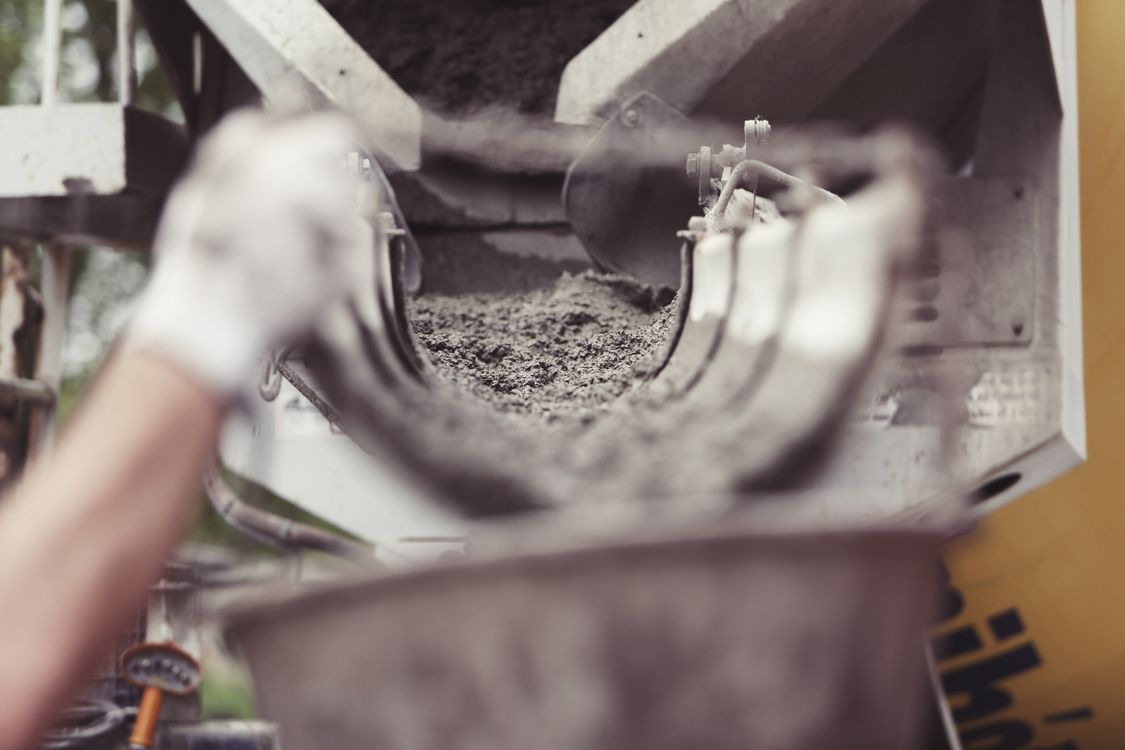
Stock photo: Ready-mix concrete discharging from a truck chute. Photo by Life Of Pix on Pexels. Illustrative image; not a K&E project photograph.

Ready to Get Your Project Moving?
Commercial concrete services built for performance, reliability, and long-term value. Speak directly with our team to get started.


designed and developed by Treasure Advertising 💚