
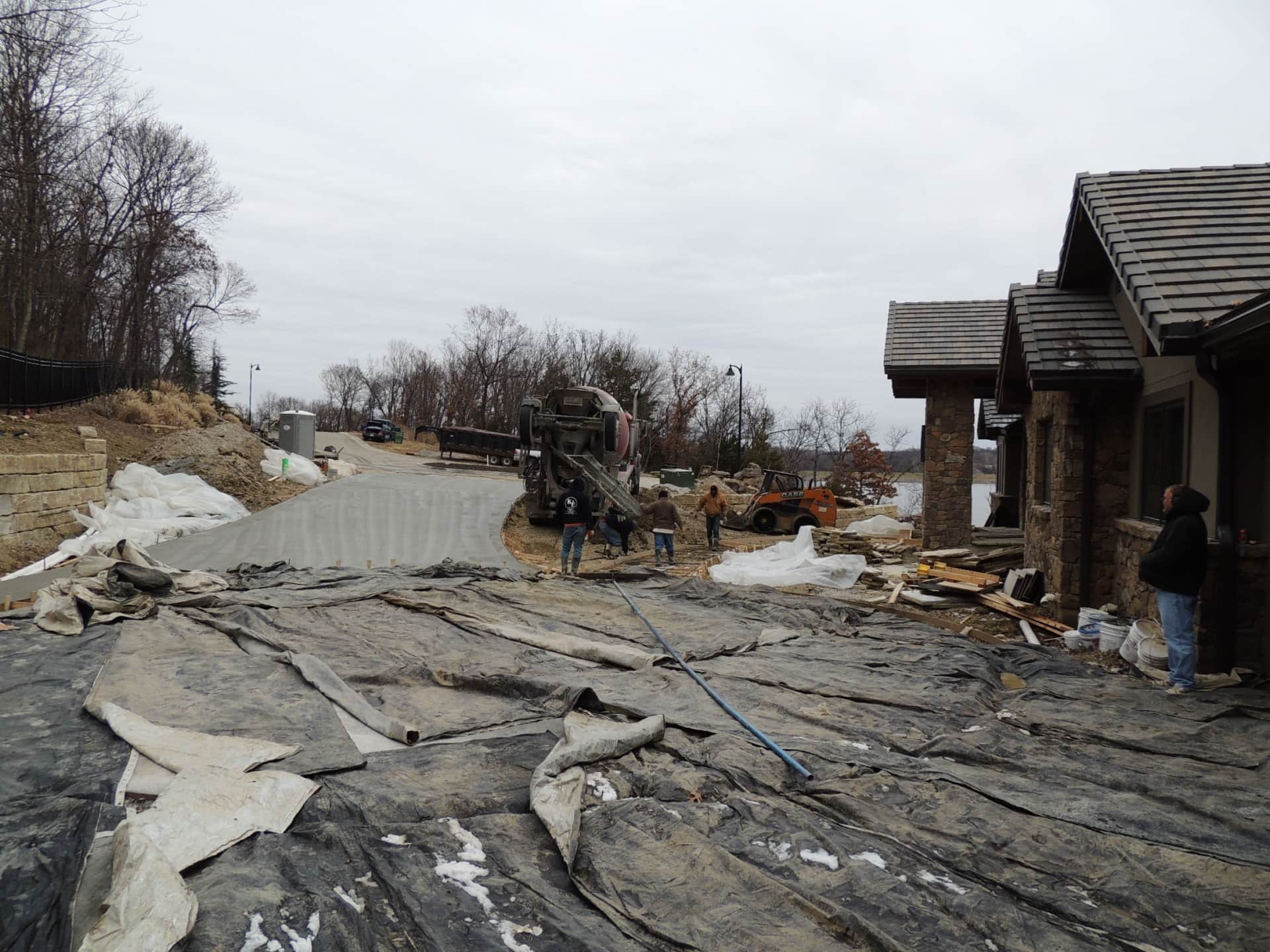
How Long Before You Can Walk or Drive on New Concrete?
The concrete truck leaves, the crew cleans up, and the slab looks finished. It is not. New concrete goes through a chemical process that keeps running for weeks after the surface stops looking wet, and the most common way homeowners and property managers damage brand new flatwork is by putting weight on it before it is ready. The timeline below is the one most contractors work to, and the reasoning behind it matters more than the numbers.
Curing Is Not Drying
Concrete does not harden because water evaporates out of it. It hardens because cement and water react chemically, a process called hydration, and that reaction needs moisture to keep going. A slab that dries out too fast actually ends up weaker, which is why crews mist, cover, or apply curing compound to new pours instead of letting the sun do the work.
Strength arrives on a curve, not a switch. A typical mix reaches somewhere around seventy percent of its design strength at seven days and is treated as fully cured at twenty-eight days. That first week is when the slab is most vulnerable and when almost all avoidable damage happens.
A Realistic Timeline
24 to 48 hours: light foot traffic. You can usually walk on the slab carefully after a day, sometimes sooner in warm weather. Keep pets off it, keep bikes and toys off it, and do not drag anything across the surface. The finish is still soft enough to scuff.
7 days: passenger vehicles. Most residential driveways can take a car after a week. Park in different spots rather than in the same place every time, avoid turning the wheel while stopped, and stay off the edges, which are the thinnest and least supported part of any slab.
28 days: full loads. Trucks, dumpsters, equipment, RVs, and anything else heavy should wait the full twenty-eight days. This is also the point at which sealing becomes appropriate, since sealers applied to concrete that is still releasing moisture can cloud, blister, or fail to bond.
These are guidelines, not guarantees. Slab thickness, mix design, reinforcement, and the weather during the pour all move the dates. A contractor who poured the slab can tell you where yours actually sits.
Why Weather Changes Everything
Temperature drives the speed of hydration. Concrete placed in cold weather gains strength much more slowly, and below about forty degrees the reaction slows dramatically. That does not mean winter work is impossible, but it does mean the timeline stretches and the crew has to protect the pour, which we cover in detail in our guide to pouring concrete in the winter.
Heat causes the opposite problem. Hot, dry, windy conditions pull moisture out of the surface faster than the slab can bleed it, which causes plastic shrinkage cracking within hours of finishing. Kansas City gives contractors both extremes in the same year, which is a real argument for scheduling flatwork into shoulder seasons when the schedule allows.
What Actually Damages New Concrete
Point loads are the biggest offender. Distributed weight is easier on a young slab than concentrated weight, so a dumpster on four small feet or a trailer jack resting on a single pad does far more harm than a car of similar total weight. Anything that concentrates load onto a few square inches should stay off until the slab is fully cured.
Edges and corners are the second weak point. They have less support underneath and less concrete around them, and they are where most first-year chipping starts. Backing over the edge of a new driveway apron is a very ordinary way to break one.
Deicing salt in the first winter is the third. A slab poured in the fall has not developed full resistance to freeze-thaw cycling, and chlorides accelerate surface scaling. Many of the failure patterns described in our guide to driveway damage and its remedies start in the slab's first season.
Joints Get Cut Long Before the Slab Is Cured
One part of the process happens much earlier than most people expect. Saw cutting normally takes place within hours of finishing, not days, because the goal is to create the joint before shrinkage cracking starts. If you see a crew cutting lines into a slab that was poured that morning, that is correct. Our explanation of how control joints work covers why the timing window is so tight.
Keeping the Slab Healthy After Week Four
Once concrete is cured, the job shifts from protection to maintenance: keeping water moving away from the slab, dealing with cracks while they are small, and resealing on a sensible cycle. Our list of flatwork maintenance practices covers what that looks like in practice, and the habits formed in the first month tend to set the tone for the slab's whole life.
Frequently Asked Questions
Can I speed up curing?
Not meaningfully, and attempts usually backfire. Accelerating admixtures can be added at the plant for cold-weather work, but heating, covering with plastic in the sun, or hosing a slab down on a schedule that suits you rather than the concrete tends to cause more problems than it solves.
Is it a problem if it rains right after the pour?
Light rain after the surface has set is generally harmless and can even help curing. Rain on a slab that is still being finished is a real problem, because it raises the water content at the surface and can leave a weak, dusty finish.
How long before I can seal a new driveway?
Wait the full twenty-eight days. Sealing a slab that is still giving off moisture is one of the more common causes of cloudy or peeling sealer.
My new concrete has hairline cracks after a week. Should I be worried?
Fine shrinkage cracks are common and often cosmetic, especially if they follow the joints. Cracks that are wide, that run across panels, or that have a height difference across them are worth having looked at.
Planning a Pour? Talk to K&E Flatwork
The cure schedule is part of the job, not an afterthought, and it should be discussed before the concrete is ordered rather than after it is placed. Whether you are looking at a new pour or a driveway repair or replacement, we will tell you up front what the timeline looks like and what you need to keep off the slab and for how long.
Contact K&E Flatwork for a free estimate, or call 816-837-5260.
.jpg)
Ready to Get Your Project Moving?
Commercial concrete services built for performance, reliability, and long-term value. Speak directly with our team to get started.


designed and developed by Treasure Advertising 💚