
What Is the Difference Between Concrete and Cement?
Concrete and cement are an integral part of the structures we see and use every day, but they’re often mistaken for each other. You may hear “concrete” and “cement” used interchangeably and wonder if they’re the same thing. This article will clear up all your questions about the difference between concrete and cement.
What Is Cement?
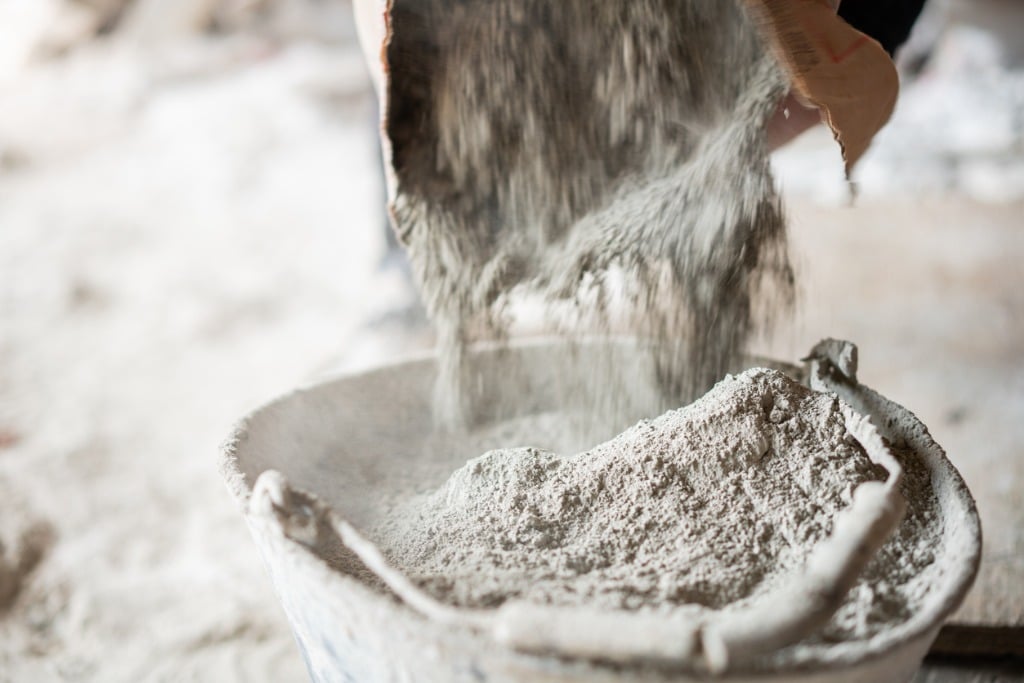
Cement is a finely powdered substance made from a mixture of calcium, silicon, iron, aluminum and other ingredients found in limestone, clay, silica sand, chalk, shale, slate, iron ore and shells. Cement is actually an ingredient used in concrete. When mixed with water, it forms a paste that binds the ingredients in the concrete together.
Types of Cement
One of the most common cement types used today is Portland cement. Portland cement was named by Joseph Aspdin, an English cement manufacturer, who claimed that the substance resembled stone from the Isle of Portland.
The type of cement used will affect the final concrete product. The different types of cement include:
- Type I is used in residential work where the concrete will not need protection from any specific conditions.
- Type II is used when the surface area might be susceptible to moderate sulfate conditions.
- Type III is used in areas that are likely to have freezing temperatures. Water that seeps into cracks in concrete can freeze, expand, and cause damage to concrete.
- Type IV can be used in industrial environments, like large buildings, etc.
- Type V is used in areas that might be likely to suffer from extreme sulfate exposure.
Can Cement Be Used on its Own?
It is rare to see cement used on its own. However, it does have other uses apart from concrete. One common example is grout. Grout is made when cement binds with water. It can be used in tilework to fill in the space between tiles. Another use for cement is aesthetic structures. These structures may even incorporate coloring agents into a cement mixture to enhance the visual appearance of outdoor pavement, stairs, windows, etc.
What Is Concrete?
Concrete is a mixture of 10-15% cement, 15-20% water, and 65-75% aggregates (sand and gravel or crushed stone). The cement and water harden and bind the aggregates into an incredibly strong rock-like mass. The water-cement ratio is extremely important. If too much water is added, the concrete can be less strong; however, adding too little will not allow the mixture to bond correctly. Concrete can be strengthened by adding more amounts of cement into the mixture. The formula for concrete is not easy, and many professionals have worked for years to perfect concrete pouring.
Concrete serves as a structurally sound building material for various structures including:
- Roadways and bridges
- Dams
- Walls
- Foundations
- Sewer systems
- Buildings
Why Is Cement Used in Concrete?
Cement is used as a binding agent in concrete, but there are specific reasons it’s so good at the job. Cement aids in hydration, which is the chemical reaction that occurs when the concrete mixture bonds with water and hardens. Portland cement prevents too much or too little water from bonding. That’s why concrete can be poured underwater and still harden and cure!
Are There Alternatives for Cement?
There are some cement alternatives that can sometimes be used in the concrete mixing process:
- Fly ash: Technically known as pulverized fuel ash, fly ash can be used in conjunction with cement. It requires some amount of cement as it cannot complete the entire hydration process without it. Fly ash is a by-product of coal-burning.
- Ground granulated blast-furnace slag: GGBS is removed from the top of iron. While this material will make concrete take longer to harden compared to Portland cement, it will gain strength over time.
- Silica fume: This is a by-product of silicon that comes in a powder form and is best used in environments heavily affected by climate conditions.
Testing for Concrete Strength
The water-cement ratio is a critical factor in making concrete strong, and while you might be able to tell that concrete is properly mixed in the pouring process, the true strength is best tested long after it appears to be dry. Tests for concrete strength are usually performed 28 days after the concrete is poured. This amount of time allows for concrete to harden fully. Concrete is not at its full strength potential even after it appears dried and set to the human eye.
Concrete structures can be tested for strength in many different ways. One type of test to assess concrete strength is the use of a rebound hammer. This measures the distance of rebound on a scale which then can be used to calculate the strength of the concrete based on the absorption of pressure.
A penetration resistance test is performed by a probe that tries to dig into the concrete. The point of depth that the probe can achieve is used to measure the strength of the concrete. Less invasive tests can be performed using ultrasonic pulse to indicate how quick vibrational energy can travel through a concrete slab. Testing concrete strength is critical to ensure the durability and strength of a structure.
K&E Flatwork Is Here for Your Concrete Needs
As Kansas City’s premier concrete service provider, K&E Flatwork offers solutions for any of your property’s concrete needs. Whether you need commercial concrete, repair and replacement of damaged concrete, parking lot paving, sidewalk paving or concrete paving, K&E Flatwork services ensure a quality job that will benefit your business.
Don’t settle for anything less than K&E Flatwork’s quality concrete services. To learn more about prices and projects, contact us today.
.jpg)
Ready to Get Your Project Moving?
Commercial concrete services built for performance, reliability, and long-term value. Speak directly with our team to get started.


designed and developed by Treasure Advertising 💚