
Concrete Resurfacing: What an Overlay Can and Cannot Fix
Concrete resurfacing renews the surface of an existing slab with a compatible overlay or resurfacing material. It can be a useful option to investigate when appearance or surface wear is the main concern. The key question is whether the concrete underneath is a suitable base for the proposed system.
For commercial owners in Kansas City, an overlay decision should include more than a finish sample. Surface preparation, transitions, operating conditions, and access during the work all belong in the proposal.
What is concrete resurfacing?
A resurfacing system places a new layer over prepared existing concrete. Cement-based polymer-modified products are one example. They are different from pouring an ordinary concrete slab over whatever is already there, and different from applying a clear protective sealer.
The material determines the allowed thickness, preparation, application conditions, and return-to-service requirements. Ask for the specific product or system rather than accepting “resurfacing” as a complete specification. Different systems should not be treated as interchangeable.
The existing slab determines the starting point
An attractive finish cannot establish whether the underlying concrete is suitable. Ask the evaluator to identify loose material, surface contamination, previous treatments, moisture concerns, and signs of movement. The condition of adjacent panels and joints also needs to be understood.
A moving or unstable slab requires a different discussion from a sound slab with cosmetic wear. If the evaluation identifies a deeper concrete problem, settle that scope before selecting the final appearance. The purpose of the assessment is to establish what the proposed system can reasonably accomplish at this location.
Preparation is part of the resurfacing system
Bonding a new surface to an existing one depends on preparation. Request a written description of how unsuitable material and bond-inhibiting contamination will be addressed. Ask how the team will verify that the prepared surface meets the system manufacturer's requirements.
For a concrete example, QUIKRETE's Re-Cap technical sheet gives product-specific preparation, layer thickness, and traffic timing instructions. It also calls for maintaining control and expansion joints. Those details illustrate why a named system matters; they are not universal specifications for every overlay.
Check edges, entrances, and drainage transitions
Before approving the work, ask how the new surface will meet doors, adjoining slabs, drains, and other fixed features. Even a relatively thin treatment needs to be considered in the context of the complete site.
Walk the proposed limits with the contractor. Mark where the finish starts and stops and ask how these edges will look. Discuss whether existing drainage or elevation problems remain outside the resurfacing scope. A proposal should make those boundaries clear so an appearance improvement is not mistaken for a redesign of the area.
Match the finish to the way the area is used
A sample can help an owner evaluate color and texture, but the conversation should also cover intended traffic, exposure, cleaning, and future maintenance. A pedestrian courtyard and a working service area should not be evaluated on appearance alone.
- Is the selected system intended for the expected traffic?
- What surface texture is proposed?
- How will the finish be cleaned?
- Will a protective treatment be part of the system?
- What appearance differences or existing conditions may remain visible?
- What written maintenance guidance will be provided?
Ask for realistic expectations about uniformity. If the project involves multiple phases or adjoining untreated concrete, review the proposed boundaries before work begins.
Plan closure time around the actual system
Separate installation time from the time required before the surface can return to use. Foot traffic and vehicle traffic may have different restrictions. Weather and material requirements can also affect scheduling.
For an occupied commercial site, identify alternate entrances, delivery arrangements, and barriers in advance. Assign someone to communicate reopening instructions to tenants and service providers. Avoid having a third party drive across the area simply because the application crew has left.
Concrete resurfacing questions to settle before signing
Will an overlay stop existing cracks from returning?
Do not assume that outcome. Ask how existing cracks and movement will be assessed and treated, what remains a limitation, and what the proposed warranty actually covers.
Is resurfacing available for every damaged slab?
No. Suitability depends on the existing concrete and the selected system. Confirm the condition of the substrate before comparing finish options or prices.
Start with an assessment of the commercial concrete
If your property needs concrete improvements, contact K&E Flatwork to discuss its condition and your goals. Review K&E's commercial concrete services and ask which repair or replacement scope fits the site before committing to any proposed surface treatment.
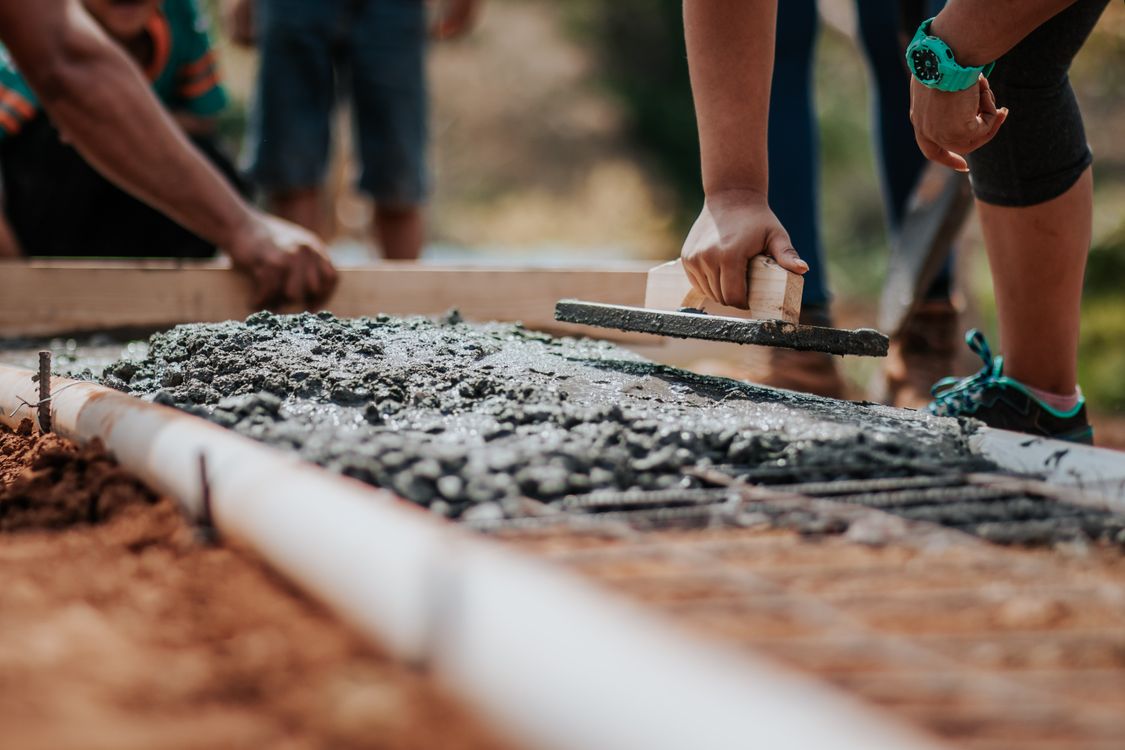
Stock photo: Stock photo illustrating concrete finishing, rather than an overlay installation. Photo by Rodolfo Quirós on Pexels. Illustrative image; not a K&E project photograph.

Ready to Get Your Project Moving?
Commercial concrete services built for performance, reliability, and long-term value. Speak directly with our team to get started.


designed and developed by Treasure Advertising 💚